

Last updated: March 2026
One of the most common mistakes new hikers make is choosing a trail that turns out to be much harder than expected.
A hike that looked simple online can suddenly become exhausting, dangerous, or even impossible to finish. Steep climbs, rough terrain, unexpected weather, or simply underestimating the distance can quickly turn a fun adventure into a stressful situation.
The good news is that with a little preparation, it’s actually quite easy to estimate how difficult a hike will be before you go.
In this guide, you’ll learn how to evaluate trail difficulty using a few key factors like distance, elevation gain, and terrain so you can choose hikes that match your fitness level and experience.
*This post may contain affiliate links. If you use them, I may earn a small commission at no extra cost to you.
Table of Contents
Quick Answer: How to Tell If a Hike Is Too Hard
You can estimate hiking difficulty by looking at four key factors:
- Distance – longer hikes require more endurance
- Elevation gain – steep climbs dramatically increase effort
- Terrain – rocky or technical trails are more demanding
- Altitude – higher elevations make hiking harder due to thinner air
As a simple rule, beginner hikers usually find trails easier when they are under 8 km (5 miles) with less than 200 meters (650 ft) of elevation gain.
Tools like a hiking difficulty calculator can also help estimate how demanding a trail will be before you go.
Why Many Hikers Misjudge Trail Difficulty
Many hiking guides label trails as easy, moderate, or hard. While those labels can be helpful, they’re often very subjective.
What feels like an easy hike to an experienced mountain hiker might feel extremely challenging for someone who is just starting out.
There are a few reasons hikers often misjudge trail difficulty:
1. Distance can be misleading
A 10 km hike on flat ground might feel easy, but a 10 km hike with steep climbs can be exhausting.
2. Elevation gain is often underestimated
Climbing several hundred meters uphill requires much more effort than most beginners expect.
3. Terrain can slow you down
Rocky trails, loose gravel, mud, and scrambling sections make hiking significantly harder than a smooth forest path.
4. Online photos can be deceptive
Photos rarely show how steep a trail actually is.
Because of these factors, the best way to judge a hike isn’t by looking at photos or short descriptions. Instead, you should look at objective metrics that describe the trail.
The National Park Service also recommends checking trail distance and elevation gain before attempting unfamiliar hikes so let’s go through the most important ones.
The 4 Things That Actually Determine Hiking Difficulty
When trying to decide if a hike might be too hard, there are four key factors you should always check.
1. Distance
Distance is usually the first thing hikers look at, and it definitely matters. The longer a trail is, the more endurance it requires.
However, distance alone doesn’t tell the full story. A long but flat trail can be easier than a much shorter hike with steep climbs.
As a rough guideline:
- Beginner hikers often feel comfortable with hikes around 5–8 km (3–5 miles)
- Intermediate hikers can usually handle 10–15 km (6–9 miles)
- Experienced hikers may regularly hike 20 km (12+ miles) or more
If you’re just starting out, it’s better to choose shorter hikes and gradually increase distance as your endurance improves.
2. Elevation Gain
Elevation gain is often the single biggest factor that determines how hard a hike will feel.
Elevation gain measures how much you climb during the hike. Even small elevation gains can make a big difference in effort.
For example:
- 200 meters (650 ft) of elevation gain is usually manageable for beginners
- 400–600 meters (1300–2000 ft) starts to feel challenging
- 800+ meters (2600 ft) is considered a demanding climb
Steep climbs require significantly more energy than walking on flat ground, and they also slow your pace.
This is why two hikes with the same distance can feel completely different depending on how much elevation they include.
3. Terrain
Terrain is another factor that many hikers underestimate.
A well-maintained dirt trail through the forest is usually quite easy to walk on. But trails can become much harder when the terrain includes things like:
- loose rocks or scree
- tree roots
- mud or sand
- steep switchbacks
- scrambling sections
Technical terrain forces you to slow down and pay closer attention to each step. It also uses different muscles than normal walking, which can make the hike feel much more tiring.
When researching a trail, it’s helpful to read reviews from other hikers to see whether they mention difficult terrain.
4. Altitude
Altitude becomes an important factor when hiking in high mountains.
At higher elevations, the air contains less oxygen, which can make hiking feel much more exhausting even if the trail itself isn’t very steep.
Many hikers start noticing altitude effects above 2,000 meters (6,500 ft).
Symptoms can include:
- shortness of breath
- fatigue
- headaches
If you’re planning to hike at higher elevations, it’s a good idea to choose easier trails and allow time for your body to adjust.
If you’re planning a longer adventure, learning how to plan a hiking trip properly can help you choose trails that match your experience level.
Apps like AllTrails can also help you see trail reviews, elevation profiles, and estimated difficulty.
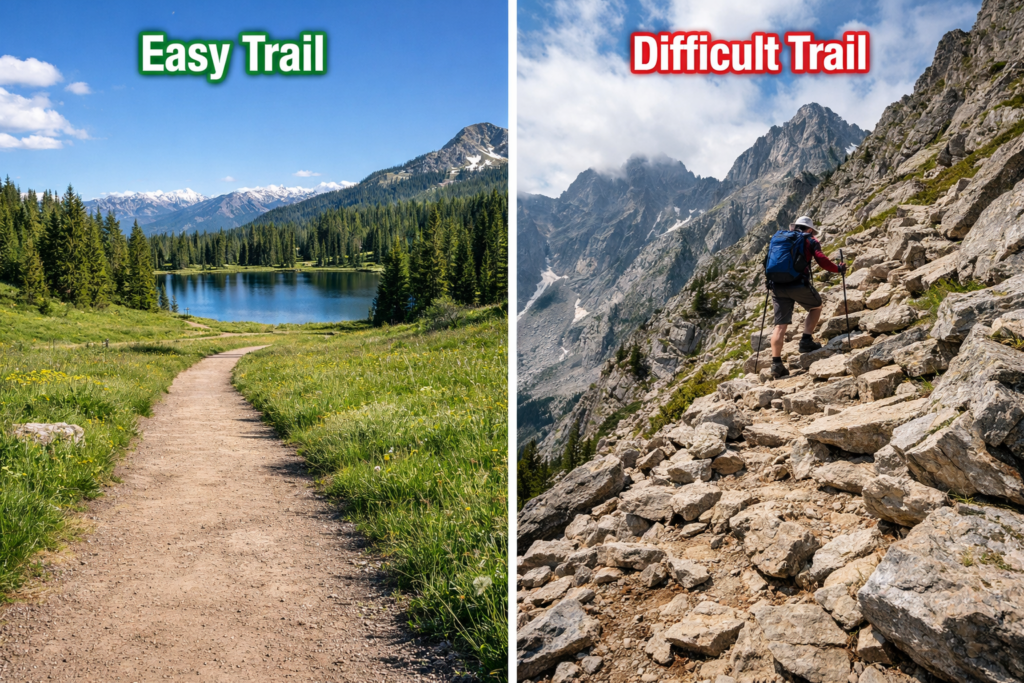
A Simple Way to Estimate Hiking Effort
Looking at distance, elevation gain, and terrain together can give you a much better idea of how demanding a hike will be.
However, combining all these factors manually can be confusing, especially for beginners.
One simple solution is to use a hiking difficulty calculator that estimates how challenging a trail will be based on distance and elevation gain.
Tools like the Hiking Effort Score Calculator can help you quickly evaluate whether a trail might be a good fit for your current fitness level.
Instead of guessing, you get a clearer idea of the effort required before heading out on the trail.
Beginner Benchmarks for Hiking Difficulty
If you’re still unsure how difficult a hike might feel, it helps to compare the trail with some general benchmarks.
While everyone’s fitness level is different, these guidelines give a good starting point.
| Experience Level | Distance | Elevation Gain | Difficulty |
|---|---|---|---|
| Beginner | 3–8 km | 0–200 m | Easy |
| Intermediate | 8–15 km | 200–600 m | Moderate |
| Advanced | 15+ km | 600+ m | Hard |
These ranges aren’t strict rules, but they can help you quickly judge whether a trail might be within your comfort zone.
According to the American Hiking Society, beginner hikers should start with shorter trails and gradually increase difficulty.
Recommended Hiking Gear by Difficulty Level
Easy Hikes (Beginner Friendly)
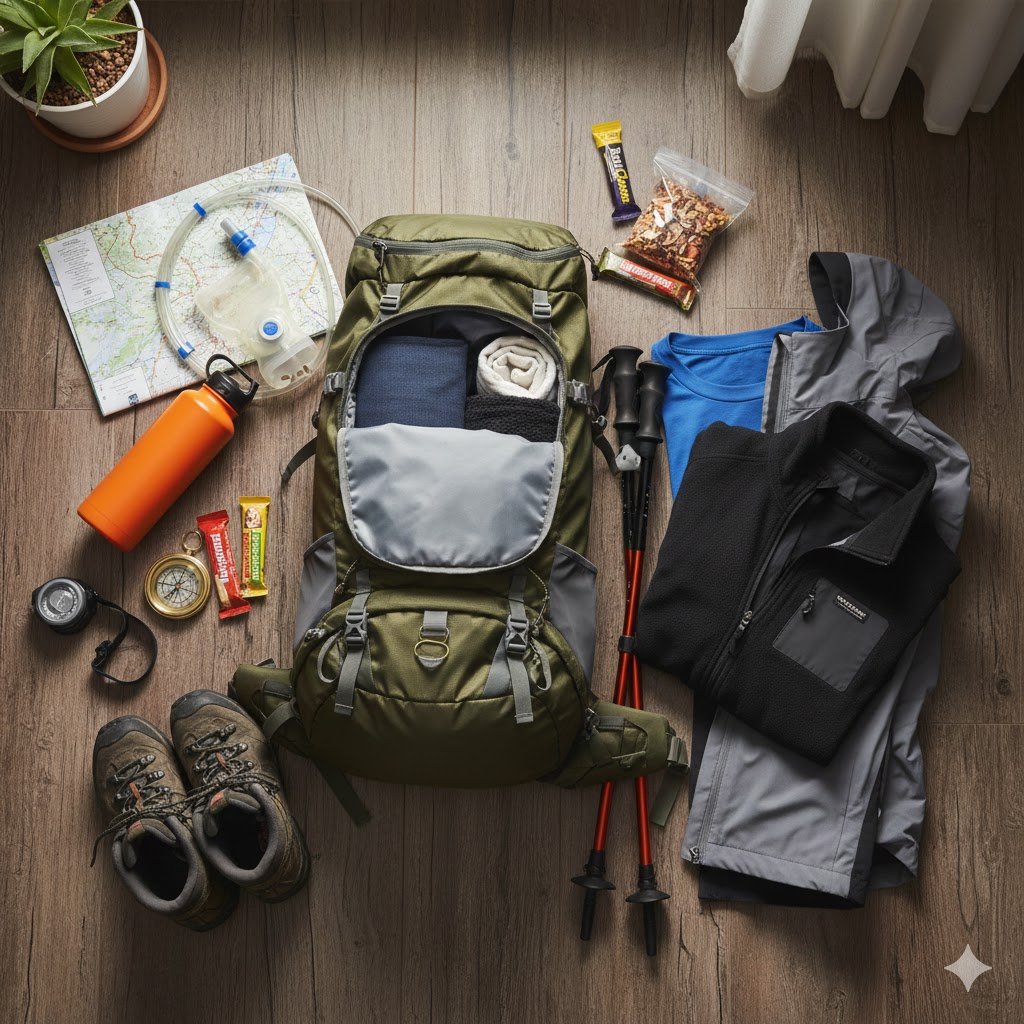
Even on easier hikes, having the right gear makes the experience much more comfortable. Here are a few beginner-friendly essentials. These items help beginners stay comfortable on shorter trails.
Recommended products:
Moderate Hikes
As hikes become longer and steeper, having more supportive gear becomes increasingly important. For longer hikes with elevation gain.
Recommended:
Difficult Hikes / Long Days
For longer or more remote hikes, additional gear can improve both safety and comfort.
Recommended:
Common Mistakes That Make Hikes Feel Much Harder
Even when hikers choose a trail that seems manageable on paper, a few common mistakes can make the hike feel far more difficult than expected.
Avoiding these mistakes can make a big difference in how enjoyable your hike feels.
Starting Too Fast
Many hikers begin a trail with lots of energy and excitement, only to burn out halfway through the hike.
Starting at a fast pace may feel good at first, but it quickly drains your energy — especially on trails with elevation gain. A better strategy is to start slower than you think you need to and maintain a steady rhythm.
Experienced hikers often say that hiking is more like a marathon than a sprint.
Underestimating the Descent
Most people focus on the uphill sections when evaluating trail difficulty, but the descent can also be challenging.
Steep downhill sections can put a lot of strain on your knees and leg muscles, especially toward the end of a hike when you’re already tired.
A trail with 600 meters of climbing also has 600 meters of descending, and both require effort.
Not Bringing Enough Water
Dehydration can make even a moderate hike feel exhausting.
Many beginners underestimate how much water they’ll need, especially on hot days or longer hikes. If you’re unsure how much to bring, check out this hiking hydration guide to estimate the right amount of water for your trip.
Staying properly hydrated helps maintain energy levels and reduces fatigue on the trail.
Choosing a Trail That’s Too Long
Distance might not be the most important factor in hiking difficulty, but it still matters.
A trail that’s just a few kilometers longer than you’re used to can quickly turn into a tiring experience, especially if it includes elevation gain or rough terrain.
A good rule is to increase distance gradually instead of jumping from short hikes to very long ones.
A Quick Difficulty Checklist Before Any Hike
Before heading out on a trail, take a few minutes to run through this quick checklist. It can help you avoid unpleasant surprises and choose hikes that match your ability level.
Ask yourself these questions:
- How long is the trail?
Make sure the distance fits comfortably within your current endurance level. - How much elevation gain does it include?
Even moderate climbs can feel challenging if you’re not used to hiking uphill. - What type of terrain should you expect?
Look for trail reviews or photos to see whether the path is smooth or technical. - How much time will the hike take?
Always allow extra time for breaks and slower sections. - What’s the weather forecast?
Heat, rain, or strong wind can make any hike more demanding. - Do you have the right gear?
Proper footwear, enough water, and basic hiking essentials make a huge difference in comfort and safety.
Taking a few minutes to check these factors can prevent many of the common problems hikers encounter on the trail.
How to Gradually Increase Hiking Difficulty
If you want to challenge yourself and tackle harder trails over time, the best approach is progressive difficulty.
Instead of jumping straight to very demanding hikes, gradually increase one factor at a time.
For example:
- add a few kilometers to your typical hiking distance
- try trails with slightly more elevation gain
- explore terrain that is a bit more technical
This gradual progression allows your body to adapt and helps you build endurance and confidence on the trail.
Over time, hikes that once felt difficult will start to feel much easier.
Use a Hiking Difficulty Calculator Before You Go
When planning a new hike, it can be helpful to estimate how demanding the trail will be before you head out.
One simple way to do this is by using a hiking difficulty calculator that takes into account both distance and elevation gain.
Instead of guessing, tools like a Hiking Effort Score Calculator can help you quickly evaluate whether a trail is likely to feel easy, moderate, or challenging for your fitness level.
This can be especially useful when comparing several different trails while planning a trip.
Final Thoughts
Choosing the right hike can make the difference between an amazing outdoor adventure and a frustrating day on the trail.
By looking at key factors like distance, elevation gain, terrain, and altitude, you can get a much clearer picture of how difficult a hike will be before you go.
If you’re new to hiking, remember that there’s no rush to tackle the most challenging trails right away. Starting with easier hikes and gradually increasing the difficulty will help you build strength, endurance, and confidence.
And when in doubt, taking a few minutes to estimate the effort required for a trail can help you choose hikes that are both safe and enjoyable.
With the right preparation, you’ll be able to explore new trails knowing they match your ability level — and enjoy the journey far more along the way.
If you want to dive deeper and learn more about trail difficulty, check The Complete Guide to Hiking Trail Difficulty Ratings
FAQ: Hiking Difficulty
How do I know if a hike is too difficult for me?
Look at the trail distance, elevation gain, and terrain. Beginner hikers should generally start with shorter hikes under 8 km and limited elevation gain.
What makes a hike difficult?
The main factors are distance, steep elevation gain, rough terrain, and altitude. Weather conditions can also increase difficulty.
How much elevation gain is considered hard?
Many hikers consider more than 600–800 meters (2000–2600 ft) of elevation gain in a single hike to be challenging.


Leave a Reply